If you manage trusts out of Guernsey, Jersey, or the Isle of Man, you’ve probably noticed a pattern over the past two years.
Your clients are spending more time in Dubai. Their businesses are increasingly UAE-based. Their banks are asking harder questions about where decisions are really being made. And the structures you’ve relied on for decades — offshore holding companies layered through the Channel Islands or BVI — are creating more friction than protection.
Here’s the thing: the offshore model isn’t broken. But for clients with genuine UAE ties, it’s becoming the wrong tool for the job.
Over the past 11 years, we’ve worked with trust companies across Guernsey, Jersey, and the Isle of Man to restructure their clients’ UAE exposure. This guide breaks down why it’s happening, what the alternatives look like, and how the transition actually works in practice.
The Problem With Offshore Trusts for UAE-Based Clients

Think of an offshore trust as a remote control. It works perfectly — as long as you’re operating at a distance. The moment you move physically closer to your assets, the remote starts losing signal.
For clients who are now UAE tax residents, three things have changed:
1. The Effectively Managed and Controlled Test
The UAE’s corporate tax framework (effective June 2023, 9% above AED 375,000) introduced a principle that catches many offshore structures off guard: if a foreign entity is effectively managed and controlled from the UAE — meaning key decisions happen here, by people who live here — it can be treated as a UAE tax resident.
Get this right and your offshore entity continues to operate cleanly. Get this wrong and the entity’s worldwide income falls into UAE corporate tax scope.
For trust companies: if your client is the key decision-maker on a Guernsey holding company and they now live in Dubai, the structure — whether it’s a Guernsey trust Dubai setup or a broader offshore trust UAE structure — may be creating a tax liability rather than avoiding one.
2. Bank Scrutiny on Control Location
UAE banks — and increasingly international banks with UAE branches — now ask pointed questions about where management and control actually sits. A Guernsey-registered entity with a Dubai-resident director, no Guernsey staff, and no Guernsey board meetings raises flags.
The result: delayed account openings, enhanced due diligence, and in some cases outright refusal. One of the most common issues we see is clients with perfectly legal structures that banks simply won’t service because the substance doesn’t match the registration.
3. Asset Fragmentation
A typical offshore structure for a UAE-based family might look like this:
- Jersey trust holding a BVI company
- BVI company holding shares in a UAE freezone entity
- Separate personal ownership of UAE real estate
- A foundation in another jurisdiction for succession
That’s four jurisdictions, four sets of advisors, four renewal cycles, and no single point of accountability. Every time a bank asks for a structure chart, it looks complex — because it is.
This level of fragmentation often works against efficient wealth structuring UAE strategies, especially when all core activity is already centered in Dubai.
The Onshore Alternative: DIFC Foundations
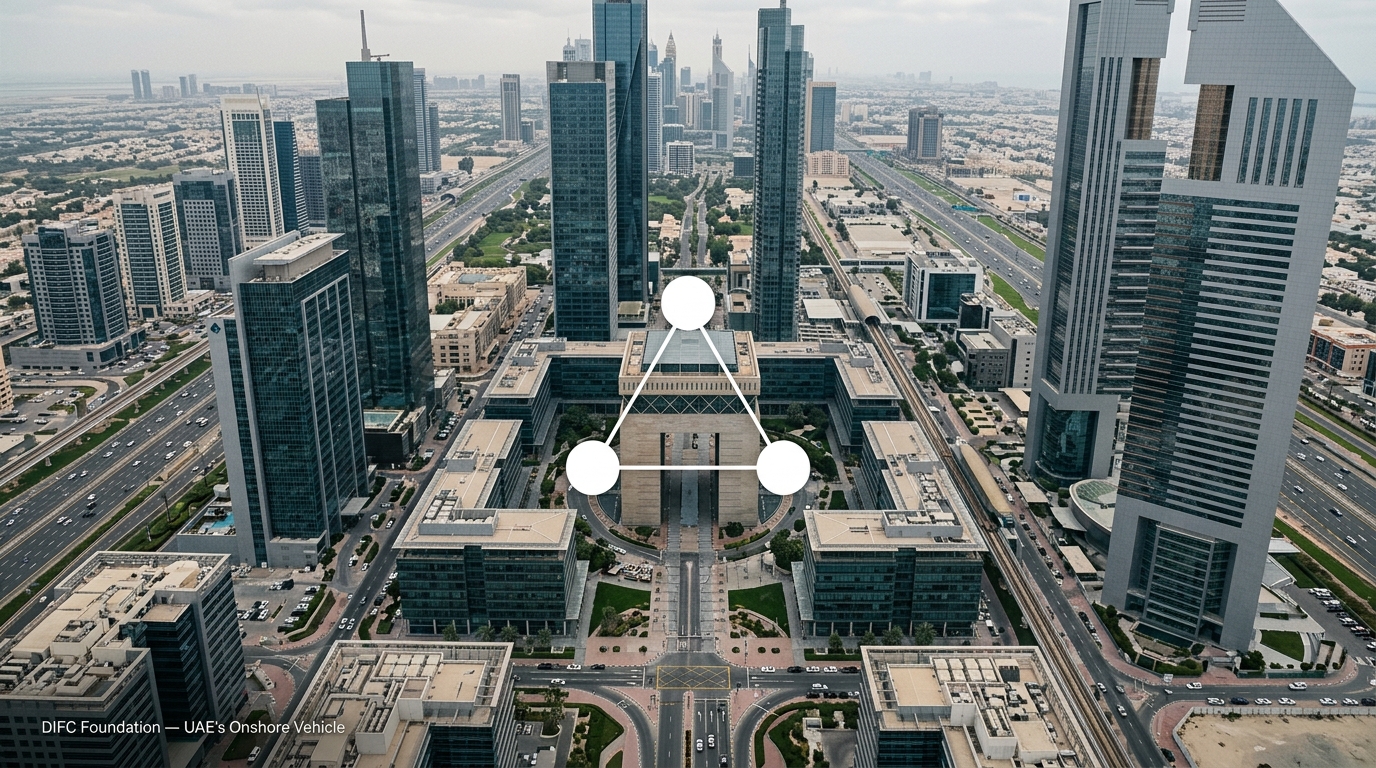
DIFC foundations have emerged as the primary onshore alternative for wealth structuring in the UAE. Unlike a trust, a foundation is a standalone legal entity — it owns its own assets, has its own legal personality, and doesn’t depend on a trustee for enforcement.
How They Work
- A council — the governing body (typically 2–3 members, can include family and professionals)
- A guardian — an oversight role, often the trust company itself
- Bylaws — the constitution, defining who benefits, under what conditions, and how control transfers
- No shareholders — the foundation owns itself, which means assets are legally separated from any individual
Why Trust Companies Are Adopting Them
For trust companies accustomed to working with Guernsey or Jersey structures, the DIFC foundation isn’t a competitor — it’s a better tool for UAE-centric clients.
| Offshore Trust | DIFC Foundation | |
|---|---|---|
| Legal personality | None | Yes, standalone legal entity |
| Asset ownership | Held by trustee for beneficiaries | Foundation owns assets directly |
| UAE real estate | Indirect ownership only | Can own UAE property directly |
| Bank acceptance | Increasing friction | Straightforward, UAE entity |
| Cost of maintenance | Multiple jurisdictions = multiple fees | Single jurisdiction, single set of fees |
The numbers reflect the shift: DIFC family-related entities grew 61% year-on-year, reaching 1,289 by end of 2025. DIFC foundations specifically grew 66%, with 1,115 total.
What a Restructure Looks Like in Practice
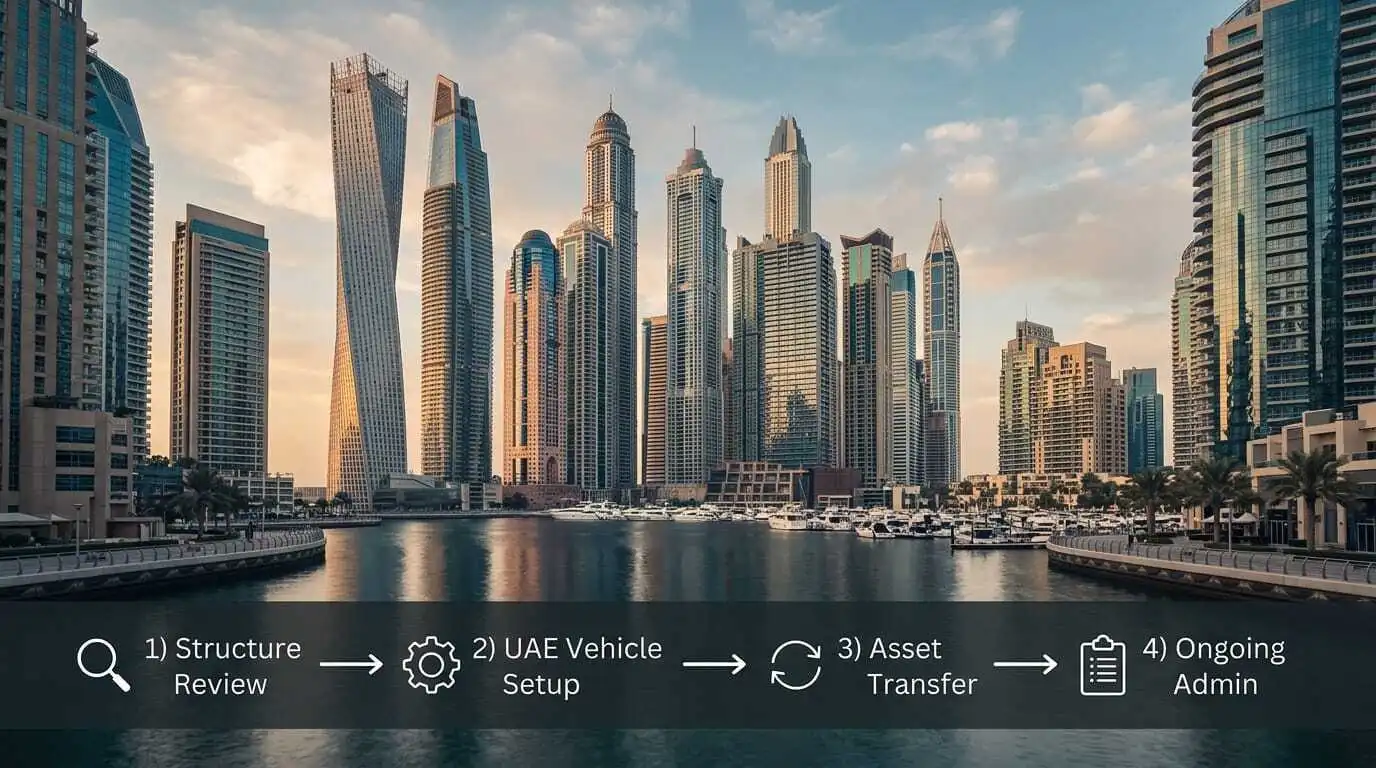
Step 1: Structure Review
We map what exists — entities, jurisdictions, asset locations, banking relationships, the lot. For most trust company clients, this means 3–8 entities across 2–4 jurisdictions. The goal isn’t to replace everything. It’s to identify where the offshore layer is creating friction rather than value.
Step 2: UAE Vehicle Setup
- DIFC foundation — for succession planning, family governance, and asset holding
- DIFC or ADGM company — for operating entities or investment holding
- RAK ICC — for simple offshore holding (when an offshore layer still makes sense)
- Freezone operating company — for any UAE-based business activity
Step 3: Asset Transfer
This is where experience matters. Transferring assets from a BVI company to a DIFC foundation involves:
- Cross-border legal opinions
- Tax clearance in the originating jurisdiction
- Share transfer mechanics (which vary by entity type)
- Bank notifications and updated KYC
- Timing — because doing this wrong can trigger unintended tax events
We coordinate the entire transfer. The trust company remains involved as guardian or council member — their role doesn’t disappear, it’s repositioned into the new structure.
Step 4: Ongoing Administration
Once the structure is live, everything runs from one jurisdiction: annual filings, accounting, and tax compliance; bank relationship management; council governance support; corporate secretarial; regulatory monitoring. One jurisdiction. One set of advisors. One point of contact.
When Offshore Still Makes Sense

For the sake of honesty: not every client should move fully onshore.
Offshore structures remain appropriate when:
- The client has no genuine UAE residence or activity
- The structure involves non-UAE assets exclusively
- Jurisdictional diversification is a deliberate risk management strategy
- The client wants specific trust features that DIFC doesn’t replicate
The best structures for UAE-based clients often combine both: a DIFC foundation as the central vehicle, with offshore subsidiaries where they genuinely serve a purpose. Hybrid, not either/or.
What Trust Companies Should Look For in a UAE Partner
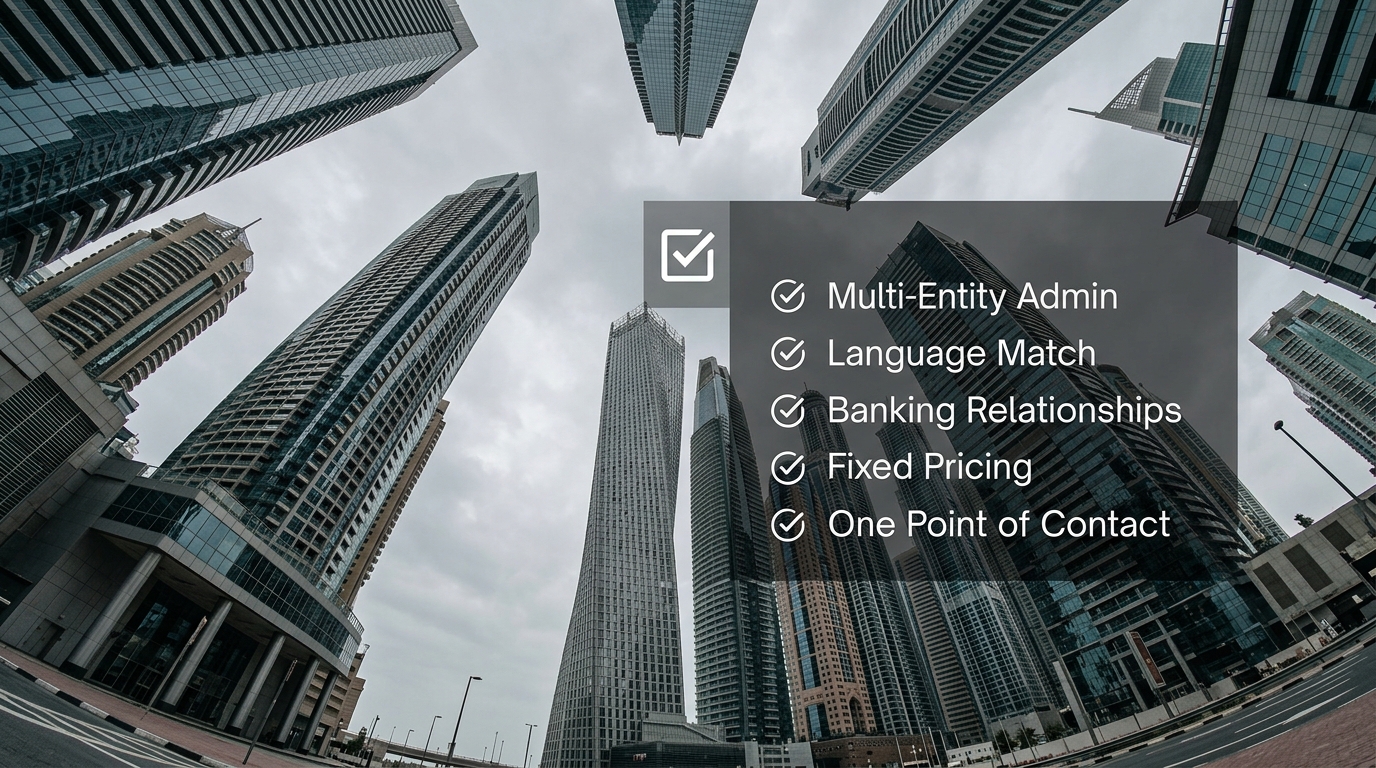
1. Multi-Entity Administration Capability
Your clients don’t have one company. They have groups. Your UAE partner needs to handle the full group — not just one entity, then refer you elsewhere for the rest.
2. Language Match
A surprising number of trust company clients speak French or Russian as their primary language. The adviser needs to speak their language — literally.
3. Banking Relationships
The hardest part of any UAE restructure isn’t the paperwork — it’s the bank account. Your UAE partner needs existing relationships with banks that understand complex structures.
4. Fixed, Transparent Pricing
Your UAE partner’s pricing needs to be clear, fixed, and fully documented — not a ‘it depends’ conversation every time.
5. One Point of Contact
Your client hired you because they don’t want to deal with five different providers. Hold your UAE partner to the same standard.
The Numbers

- DIFC foundation setup: varies by complexity — DIFC fee structure is public and transparent
- Ongoing administration (full group): typically AED 80,000–300,000+ per year depending on entity count, transaction volumes, and compliance requirements
- Timeline: Foundation setup in 2–4 weeks; full group restructure in 2–6 months
- Banking: Bank account opening is a separate process — we guarantee outcomes, with a refund if the account doesn’t open
These are not company formation prices. This is ongoing, multi-entity corporate administration — accounting, tax, compliance, banking, governance — under one roof.
Next Steps for Trust Companies

If you have clients with UAE ties and you’re evaluating whether their offshore structure still serves them, we’re happy to run a confidential structure review.
We work with trust companies as a white-label-grade partner: you remain the client’s primary relationship, we provide the UAE execution. Your reputation stays intact because ours is on the line.
No pitch. No commitment. Just an honest assessment of whether the current structure is still the right one.
Contact Jacques Isabelle — Book a Discovery Call — for trust company partnerships and English-speaking corporate structures.
Contact Pierre Martens — Book a Discovery Call — for French-speaking clients and EU cross-border structures.
GCG Structuring provides corporate structuring, administration, and advisory services from Dubai. This article is for informational purposes and does not constitute legal or tax advice.
Related Articles
FAQ
1. 0 What is an LLC in the UAE mainland?
Yes. A DIFC foundation is a UAE-registered legal entity and can directly own freehold property in designated areas. This eliminates the need for an intermediary company.
2. 0 Can foreigners fully own a mainland LLC?
It depends on the client’s situation. For clients with genuine UAE residence and UAE-based assets, a DIFC foundation offers stronger local substance, simpler banking, and court-tested asset protection.
3. 0 How long does LLC setup in UAE mainland take?
Typically 2–4 weeks from submission of complete documentation. A full restructure involving asset transfers from other jurisdictions takes 2–6 months.
4. 0 Is a physical office required for a mainland LLC?
Absolutely. Trust companies commonly serve as council members or guardians within the DIFC foundation structure, maintaining oversight and relationship management.
5. 0 Can a mainland LLC sponsor visas?
Potentially, depending on the assets and the transfer mechanism. This is why the restructure needs to be coordinated with advisors in both jurisdictions. We work jointly with the trust company’s existing counsel to manage this.