

In the UAE, business moves fast. Money flows across borders, new companies pop up every day, and opportunities arrive at the speed of thought. For many entrepreneurs and small‑to‑medium businesses that’s exciting. But there is a less glamorous side to running a business here: bank compliance and the constant need to stay in line with regulations.
Because when things go wrong, even by accident, you can end up facing something that feels like a nightmare: a frozen account. A frozen account means you lose access to your own funds. Payroll stalls. Suppliers go unpaid. Deals collapse. Growth grinds to a halt.
In this article, we explore what an UAE bank account freeze entails, why it occurs, and the updated rules and practices that businesses must follow in 2025. We will outline common triggers that lead to account freezes, explain corporate banking requirements under the latest UAE compliance 2025 regulations, and provide practical guidance on structuring a company to maintain smooth banking operations.
Table of Contents
UAE Bank Account Freeze: What It Means for Your Business
An UAE bank account freeze occurs when a financial institution temporarily or permanently restricts access to a company’s bank account. Unlike routine holds for verification, a freeze can prevent withdrawals, transfers, and even the receipt of incoming payments. For businesses, this can disrupt daily operations, delay salaries, and strain relationships with suppliers or clients.
Understanding the implications of an UAE bank account freeze is essential for every business owner operating in the UAE. It is not only a financial inconvenience but also a signal that regulatory or compliance issues may exist within the company’s banking practices.
Immediate Effects on Business Operations
- Cash Flow Disruption: Businesses may struggle to meet operational expenses, pay employees, or settle supplier invoices.
- Reputational Impact: Partners, investors, and clients may perceive the business as unstable or non-compliant.
- Operational Delays: Pending transactions, contractual obligations, and planned investments can be stalled until the freeze is resolved.
Long-Term Implications
- Compliance Scrutiny: A freeze often triggers closer monitoring by banks and regulators under UAE compliance 2025 standards.
- Difficulty in Future Banking Approvals: Businesses may face challenges when opening new accounts or applying for credit facilities.
- Potential Legal Implications: Depending on the reason for the freeze, there could be legal or regulatory consequences if issues are not addressed promptly.
Businesses need to recognize that an UAE bank account freeze is rarely arbitrary. It typically reflects underlying issues in corporate practices, documentation, or compliance. Being proactive and structured in banking operations significantly reduces the risk of encountering such freezes.
Why Bank Accounts Freeze in UAE: Common Triggers
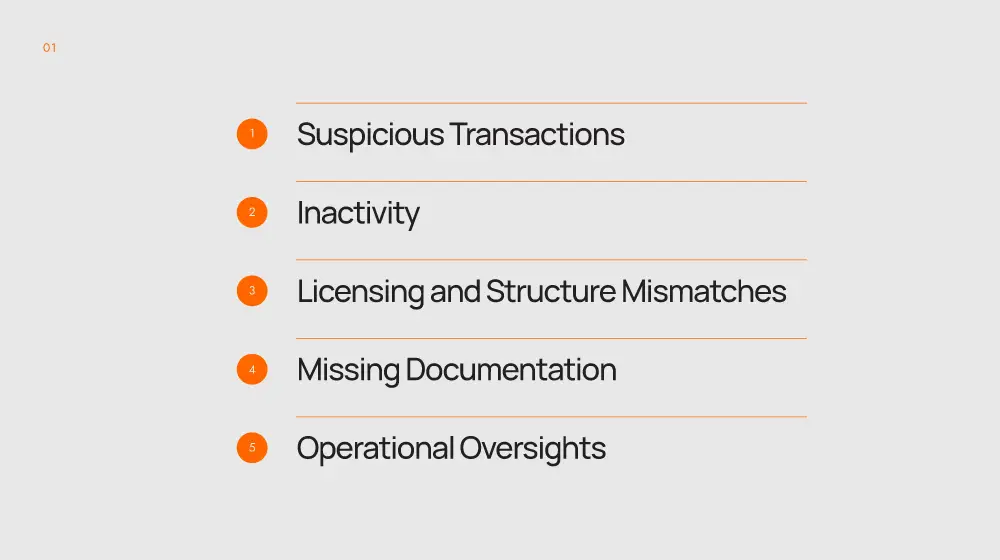
Businesses in the UAE often face an UAE bank account freeze due to regulatory or operational concerns. Understanding the common triggers can help prevent disruptions.
Suspicious Transactions
Suspicious reports increased by over 80% compared with prior periods, showing heightened vigilance and broader coverage of reporting entities.
Banks monitor accounts for unusual activity under AML rules UAE 2025. Large or frequent transfers without clear business justification can trigger a freeze. Ensuring all transactions match the company’s declared activity reduces risk.
Inactivity
Accounts left inactive for long periods may be frozen automatically. This affects payroll, vendor payments, and daily operations until verification is completed.
Licensing and Structure Mismatches
If a company’s license does not match its actual business activity, banks may restrict the account. Ownership or signatory inconsistencies can also lead to an UAE bank account freeze.
Missing Documentation
Outdated or incomplete records, such as shareholder details or financial statements, often cause temporary freezes. Keeping all documents updated ensures smoother banking operations.
Operational Oversights
Using personal accounts for business transactions, frequent changes in account instructions, or multiple signatories with inconsistent details can unintentionally trigger a freeze.
By addressing these issues, businesses can minimize the risk of UAE bank account freeze and maintain reliable banking operations.
Understanding UAE Compliance 2025: What SMEs Must Know

UAE compliance 2025 introduces stricter expectations for how companies manage and justify their financial activity. These updates aim to improve transparency and reduce risk, and they directly influence how banks assess a business before placing an UAE bank account freeze.
Clear Alignment Between Activity and Transactions
Banks now examine whether your transactions match your licensed activity. Any mismatch can trigger questions or a temporary freeze.
Updated and Complete Documentation
Companies must keep shareholder details, contracts, and financial records updated at all times. Missing documents remain one of the main causes of corporate bank account issues UAE.
Stronger AML Checks
Under AML rules UAE 2025, banks require clear explanations for large or unusual transactions. A simple lack of clarity can result in account reviews.
Accurate Licensing
Your trade license must reflect what the business actually does. Outdated or incorrect activity codes can lead to an UAE bank account freeze.
Reliable Internal Controls
Banks expect consistent bookkeeping and organized financial records. Strong internal processes help in avoiding bank account freezes UAE and support smoother banking approvals.
Staying aligned with UAE compliance 2025 helps SMEs reduce disruptions and maintain stable access to their corporate accounts.
Common Corporate Bank Account Issues UAE Businesses Face
Many SMEs encounter banking challenges that can lead to delays, reviews, or an UAE bank account freeze. Most of these issues are avoidable with proper structure and record-keeping.
Inconsistent Business Activity
One of the most common problems under corporate bank account issues UAE is when a company’s transactions do not match its licensed activity. Even small deviations can raise concerns during routine bank reviews.
Unclear Ownership or Signatory Details
Banks require clear, updated information on shareholders and authorized signatories. Any mismatch in signatures, Emirates IDs, or corporate resolutions can temporarily restrict account access.
Irregular Transaction Patterns
Sharp increases in volume, unexplained international transfers, or inconsistent revenue patterns can trigger internal reviews. Under AML rules UAE 2025, these patterns require clear justification.
Outdated Corporate Documents
Expired licenses, outdated MoAs, or missing financial statements remain leading causes of account complications. Incomplete documentation often results in slower processing and a higher chance of an UAE bank account freeze.
Using Personal Accounts for Business Activity
Some companies mix personal and business payments, which banks view as a compliance risk. This directly affects credibility and complicates future approvals.
Addressing these issues early strengthens the company’s banking profile and supports avoiding bank account freezes UAE in day-to-day operations.
Structuring Your Company to Avoid Bank Account Freezes

A proper company structure plays a major role in preventing an UAE bank account freeze. Banks closely assess how the business is set up, how ownership is defined, and whether activities match the company’s actual operations.
Choose the Right Activity and License
Your licensed activity must accurately reflect what the company does. If the work expands or changes, the trade license should be updated immediately. Clear, accurate activity codes are essential for business structure for banking approval.
Maintain Transparent Ownership
Banks expect clear visibility of all shareholders. Having clean corporate documentation, updated resolutions, and consistent signatory details reduces the chance of corporate bank account issues UAE.
Keep Records Organized
Financial statements, supplier contracts, invoices, and proof of funds should always be ready for submission. Under UAE compliance 2025, missing documents can slow down reviews and increase the risk of an account freeze.
Align Operations With Declared Activity
Every transaction should make sense based on your licensed activity. This alignment is key to avoiding bank account freezes UAE, especially for companies handling cross-border payments or multiple revenue streams.
Use a Clean Corporate Structure
Avoid overly complex ownership layers unless necessary. Simpler structures are easier for banks to review and support faster account approvals.
A structured, transparent business setup strengthens your banking profile and significantly reduces the risk of encountering an UAE bank account freeze.
Best Practices for SMEs: Transparency and Compliance
Maintaining transparency and strong internal controls is one of the most reliable ways for SMEs to avoid an UAE bank account freeze. Banks in the UAE place significant importance on clarity, consistency, and proper documentation, and even small gaps can lead to reviews or temporary restrictions.
Keep Transactions Clear and Traceable
Banks want to understand the purpose behind every transaction. When payments are supported with invoices, contracts, or simple internal notes, it becomes easier for the bank to verify activity under AML rules UAE 2025. A clear audit trail reduces the likelihood of misunderstandings and protects the business during compliance checks.
Maintain Updated Corporate Documents
Outdated licenses, old MoAs, or missing shareholder details are still among the most common corporate bank account issues UAE businesses face. Keeping these documents current ensures the bank can complete routine reviews without delay, lowering the chance of an unexpected freeze.
Communicate With Your Bank
If your revenue grows, your model shifts, or you start dealing with new markets, informing your bank in advance builds trust. This makes your operations easier to assess and supports avoiding bank account freezes UAE, especially when transaction patterns change.
Use Proper Accounting Practices
Accurate bookkeeping is not just a formality under UAE compliance 2025. It shows banks that the company is well-managed and financially organized. Clean records make it easier to justify cash flow and respond quickly when banks ask for supporting documents.
Avoid Mixing Personal and Business Funds
When personal and corporate transactions appear in the same account, banks see it as a compliance risk. Keeping everything separate helps maintain clarity and reduces the probability of an UAE bank account freeze.
SMEs that stay organized, transparent, and communicative with their bank are far less likely to face account interruptions. These best practices build a stable banking profile and support long-term business continuity.
What to Do if Your Account Gets Frozen

If your company experiences an UAE bank account freeze, the most important step is to respond quickly and stay organized. A freeze does not always mean wrongdoing. In most cases, the bank simply needs clarification, updated documents, or proof that the company’s activity aligns with its license.
Contact Your Bank Immediately
The first step is to reach out to your relationship manager. Banks usually explain the reason for the freeze and outline what they need to reopen the account. Providing information promptly prevents further delays and helps the review move faster.
Prepare the Required Documents
Most freezes are linked to missing or outdated records. Banks may request updated licenses, shareholder details, invoices, contracts, or financial statements. These documents help them verify that your operations match your declared business activity under UAE compliance 2025.
Clarify Transaction Details
If the freeze is related to unusual transfers or sudden changes in volume, be ready to explain the purpose behind the transactions. A simple clarification supported by invoices or contracts often resolves concerns, especially when dealing with questions related to why bank accounts freeze in UAE.
Review Your Company Structure
If the freeze stems from licensing or activity mismatches, you may need to update your trade license or restructure certain details. This step helps prevent repeated corporate bank account issues UAE and strengthens your banking profile moving forward.
Avoid Repeating the Same Triggers
Once the freeze is lifted, take the opportunity to improve internal controls, update documents regularly, and maintain consistent communication with your bank. These steps play a direct role in avoiding bank account freezes UAE in the future.
The Central Bank of the UAE operates a comprehensive financial crime compliance programme that includes regular risk assessments, planned and ad-hoc evaluations, and cooperation with other regulators to mitigate money laundering and terrorism financing risks.
Stay Compliant, Stay Operational

A stable banking relationship in the UAE depends on clear operations, updated documents, and alignment with UAE compliance 2025. Most UAE bank account freezes result from avoidable issues, and maintaining proper bookkeeping, transparent transactions, and accurate licensing significantly reduces this risk.
Having a well-structured company also minimizes corporate bank account issues UAE and supports smooth banking approvals.
GCG Structuring helps businesses create the right setup for banking, from accurate activity codes to clear ownership and organized compliance documents. With expert support, companies can prevent UAE bank account freezes and maintain uninterrupted financial operations.
FAQ
1. 0 What is an UAE bank account freeze?
An UAE bank account freeze happens when a bank restricts access to a company’s account. This can block withdrawals, transfers, and incoming payments until the bank verifies compliance, documentation, or transaction details.
2. 0 Why do bank accounts freeze in UAE?
Accounts are often frozen due to unusual or suspicious transactions, inactivity, mismatched business activity, or missing documents. These measures are part of AML rules UAE 2025 and general banking compliance requirements to protect both the bank and the business.
3. 0 How can SMEs avoid a bank account freeze?
Businesses can reduce risks by keeping licenses and shareholder records up to date, maintaining clear and traceable transactions, and aligning all activity with the declared business operations. Regular communication with the bank also helps in avoiding bank account freezes UAE.
4. 0 What should I do if my account is frozen?
Contact your bank immediately to understand the reason. Provide the required documents and clarify any unusual transactions. Reviewing your company structure may help prevent repeated corporate bank account issues UAE.
5. 0 How does company structure affect banking?
A clear structure with accurate ownership, signatories, and licensed activities ensures compliance. Proper business structure for banking approval reduces risk and helps avoid an UAE bank account freeze.