With UAE’s tax incentives, access to international markets, and strong regulatory environment, the city continues to draw in entrepreneurs looking to secure both growth and stability. But every investor entering Dubai’s market quickly faces the same critical decision: which legal structure best supports their business ambitions?
Among the most common choices are setting up a Limited Liability Company (LLC) or a Sole Establishment, also widely referred to as a sole proprietorship. At first glance, both options may seem like straightforward entry points. However, the choice you make has lasting implications for ownership rights, liability exposure, taxation, and your ability to scale.
In this blog, we will break down the difference between LLC and sole establishment in Dubai, while keeping investor needs at the center of the discussion. You’ll see how ownership works in practice, the level of protection each structure provides, how profits are treated, and why certain activities are better suited to one model over the other.
Table of Contents
What Is a Sole Proprietorship in Dubai?

A sole proprietorship in Dubai is a business owned and operated by a single individual. Unlike other corporate structures, it does not create a separate legal entity, meaning the owner and the business are considered the same under the law. The individual owner is fully responsible for all business operations, liabilities, and financial obligations.
Key Features of a Sole Proprietorship
Ownership and Control
In a sole proprietorship, the business is entirely owned by one person, who has full control over all decisions, operations, and management. Foreign investors can establish a sole proprietorship but generally need a local service agent to assist with licensing and regulatory requirements. The service agent does not have any ownership or decision-making power.
Liability
One of the defining features of a sole proprietorship is unlimited liability. The owner is personally responsible for all debts and legal claims against the business. Any financial obligations or legal disputes can directly affect the owner’s personal assets.
Business Scope
Sole proprietorships in Dubai are mainly designed for professional services and small-scale commercial activities. They are not suitable for large-scale trading, industrial operations, or businesses that require multiple shareholders.
Capital Requirements
Starting a sole proprietorship generally requires minimal capital. There is no need for multiple shareholders or formalized capital contribution, making it a more accessible option for individual entrepreneurs.
Profit Retention
All profits generated by a sole proprietorship belong solely to the owner. There is no requirement to distribute income among partners or shareholders. This simple profit structure allows the owner to manage revenue directly.
What Is an LLC in Dubai?

A Limited Liability Company (LLC) in Dubai is a common business structure that allows two or more shareholders to establish a company with limited liability protection. Unlike a sole proprietorship, an LLC is a separate legal entity, meaning the business has its own legal identity, and the owners’ personal assets are generally protected from business liabilities.
Ownership and Shareholders
An LLC must have at least two shareholders and can have up to 50. In many sectors, foreign investors can now own 100% of an LLC, although certain industries may still require a local partner holding a minority share. Shareholders have defined ownership percentages, and decisions are generally made collectively or according to the company’s internal agreements.
Liability Protection
A key advantage of an LLC is that liability is limited to the company’s capital contribution. Shareholders are not personally responsible for the company’s debts beyond the amount they have invested, offering a level of protection not available in a sole proprietorship.
Business Scope
LLCs in Dubai can engage in a wide range of activities, including commercial trading, industrial operations, and professional services. This flexibility makes them suitable for investors who plan to operate larger-scale businesses or work in industries with regulatory complexity.
Capital Requirements
While previous regulations required a minimum share capital for LLC formation, recent updates have removed this requirement in most cases. Investors still need to declare the company’s capital, but there is no mandatory fixed amount, making setup easier while still providing credibility to clients and partners.
Profit Distribution
Profits in an LLC are distributed according to shareholder agreements. This structure allows flexibility in sharing profits and reinvesting earnings, which is particularly useful for companies with multiple investors. Shareholders are taxed based on the corporate tax framework rather than personal income, providing additional financial structure.
If you want to learn more about the corporate tax framework, here’s a full guide that explains everything about corporate tax registration in Dubai.
Ownership Rules Compared: LLC vs Sole Proprietorship
Ownership is one of the most significant differences between an LLC and a sole proprietorship in Dubai. The rules not only affect how the business is structured but also influence control, investor rights, and regulatory compliance.
Sole Proprietorship Ownership
A sole proprietorship can only be owned by one individual. The owner has complete control and direct responsibility for the business. For foreign nationals, a local service agent is typically required to assist with licensing and compliance. The service agent does not hold any share in the company and has no authority in management decisions.
LLC Ownership
An LLC requires at least two shareholders and allows up to 50. Shareholding can be divided into percentages, and profits are distributed based on those shares. Since the introduction of foreign ownership reforms, investors in many sectors can now establish LLCs with 100% foreign ownership. However, certain strategic industries may still require a local partner holding a minority share.
Key Comparison
The key difference is that a sole proprietorship offers direct, individual control but comes with limitations for foreign investors, while an LLC provides flexibility through shared ownership and, in most cases, no longer requires a mandatory local partner.
Liability Risks: Protecting Investor Assets
Liability is one of the most important factors to consider when comparing an LLC with a sole proprietorship in Dubai. The level of protection offered to investors differs greatly between the two structures and can influence long-term security.
Sole Proprietorship Liability
A sole proprietorship exposes the owner to unlimited liability. This means the business and the individual are legally the same entity. If the business incurs debts or faces legal claims, the owner’s personal assets, such as property, savings, or other holdings can be used to settle obligations. For investors, this creates significant risk, especially in industries with higher financial exposure.
LLC Liability
An LLC provides limited liability protection. The company is recognized as a separate legal entity, so shareholders are only responsible for business debts up to the value of their investment in the company. Personal assets remain protected, which gives investors greater security when taking on contracts, loans, or expansion projects.
Why Liability Matters for Investors
When considering sole proprietorship vs LLC, liability is often the deciding factor. Sole proprietorship may be suitable for small professional services with low risk, but for investors managing larger projects or dealing with external financing, the protection offered by an LLC is far more aligned with safeguarding personal wealth.
Capital Requirements and Setup Costs
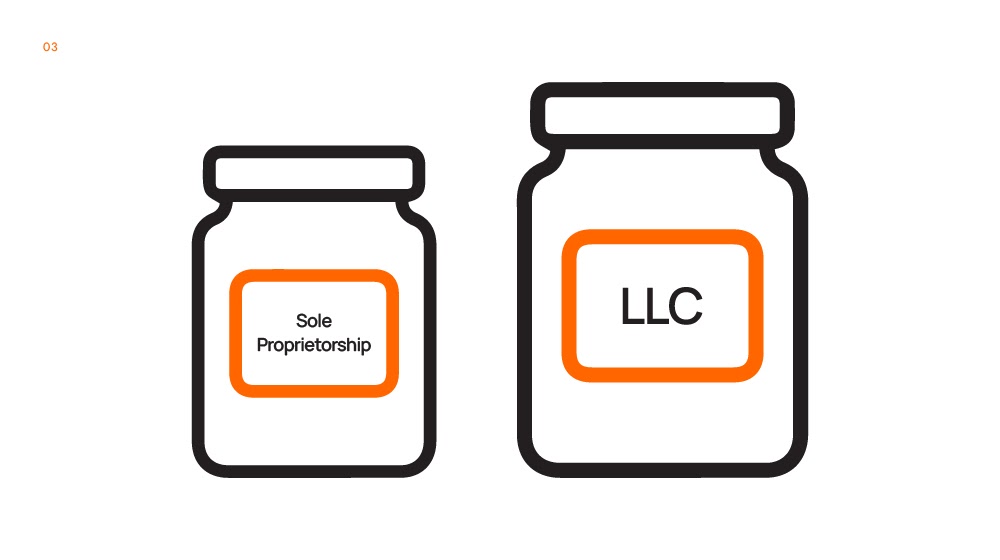
The cost of setting up a business in Dubai depends on the legal structure chosen. Investors often compare a sole proprietorship with an LLC to see which is more practical for their budget and long-term goals.
Sole Proprietorship Setup Costs
Starting a sole proprietorship in Dubai is usually more affordable. The process involves fewer licensing fees, no minimum capital requirement, and a simpler registration pathway. Many professionals, such as consultants, freelancers, or service providers choose this route because it allows them to begin operating quickly without large upfront commitments.
LLC Setup Costs
An LLC requires higher setup expenses. Investors must account for incorporation fees, notary charges, and sometimes a minimum share capital deposit, depending on the emirate or free zone regulations. While these costs are higher, the LLC structure also allows for wider business activities and stronger legal protection, which can justify the initial investment.
Cost Considerations for Investors
When evaluating costs, it’s not just about setup fees. A sole proprietorship might be cheaper at the start, but it also comes with unlimited liability. On the other hand, an LLC requires a higher financial outlay but provides stronger protection for both the business and the investor’s personal assets.
A recent update shows that from January 2025, the UAE applies a 15% minimum top-up tax on large multinational enterprises under the OECD Pillar Two framework.
Taxation and Profit Distribution
Tax obligations and how profits are distributed are major factors investors must evaluate when choosing between a sole proprietorship and an LLC in Dubai.
Taxation for Sole Proprietorship
A sole proprietorship in Dubai generally benefits from straightforward taxation. The income earned is treated as the personal income of the owner, and with Dubai’s favorable tax regime, most activities are exempt from personal income tax. However, depending on the nature of the business, corporate tax may apply once revenue crosses certain thresholds.
Taxation for LLC
An LLC is treated as a separate legal entity for tax purposes. This means the company itself is responsible for fulfilling its tax obligations. Similar to a sole proprietorship, many LLCs enjoy tax exemptions in Dubai, but the 9% corporate tax applies above the specified profit threshold. Compliance requirements are typically more structured for LLCs than for sole establishments. Also we recommend checking our guide on how to benefit from strategic tax optimization in the UAE.
Profit Distribution
- Sole Proprietorship: Profits belong entirely to the owner. There’s no legal separation between business income and personal income, which means the investor can freely use the earnings.
- LLC: Profits are distributed according to the ownership agreement between shareholders. This allows flexibility, especially when multiple investors are involved, but it also requires formal documentation and legal clarity.
Business Activities Allowed

One of the biggest differences between an LLC and a sole proprietorship in Dubai lies in the scope of activities each structure can perform.
Sole Proprietorship Activities
A sole proprietorship is typically limited to professional and service-based activities. This structure is common for consultants, freelancers, legal advisors, and other professionals who rely on their expertise rather than trading goods. Commercial and industrial activities are usually not permitted under this license type.
LLC Activities
An LLC offers far greater flexibility. It can engage in commercial, industrial, and professional activities, making it a preferred choice for investors who want to trade goods, open retail outlets, or operate large-scale businesses. The wide range of permitted activities is one of the key reasons foreign investors lean toward LLC formation. If you’re interested in LLC formation and also have free zone set up in mind, here’s a detailed guide on the difference between LLC and free zone in UAE so you can avoid costly mistakes.
Choosing Based on Activities
For investors, the choice often comes down to the nature of their business. If the goal is to provide specialized services, a sole proprietorship may be the right fit. If the plan is to expand into trading, manufacturing, or broader commercial operations, an LLC is the stronger option.
Investor Credibility and Scalability
The choice between an LLC and a sole proprietorship in Dubai affects how investors and potential partners view the business. Credibility and the ability to scale operations are often decisive factors in long-term success.
Credibility of Sole Proprietorship
A sole proprietorship in Dubai is often tied closely to the individual owner’s reputation. While this can work well for consultants and service providers who build trust through personal expertise, it may limit credibility with banks, larger corporations, or government tenders. Many institutions prefer to work with companies that have a recognized corporate structure.
Credibility of LLC
An LLC typically carries more weight in terms of credibility. It is seen as a separate legal entity with shared ownership, a board structure, and defined liability rules. This makes it easier to secure contracts, attract investors, and build long-term business relationships. Banks and financial institutions are also more likely to extend credit facilities to an LLC compared to a sole proprietorship. Opening a bank account is one of the most important parts of setting up a business in the UAE. This is an article where we breakdown how to open a business bank account in the Dubai so you can stay compliant and avoid fines.
Scalability Considerations
- Sole Proprietorship: Growth is often limited to the owner’s capacity and professional reputation. Expansion into new markets or industries can be challenging since the structure does not allow for shared ownership or equity investment.
- LLC: Built with scalability in mind, an LLC can add partners, attract investors, and expand into new lines of business without major structural changes. The flexibility in ownership and activities makes it a better vehicle for long-term expansion.
Compliance and Regulatory Obligations
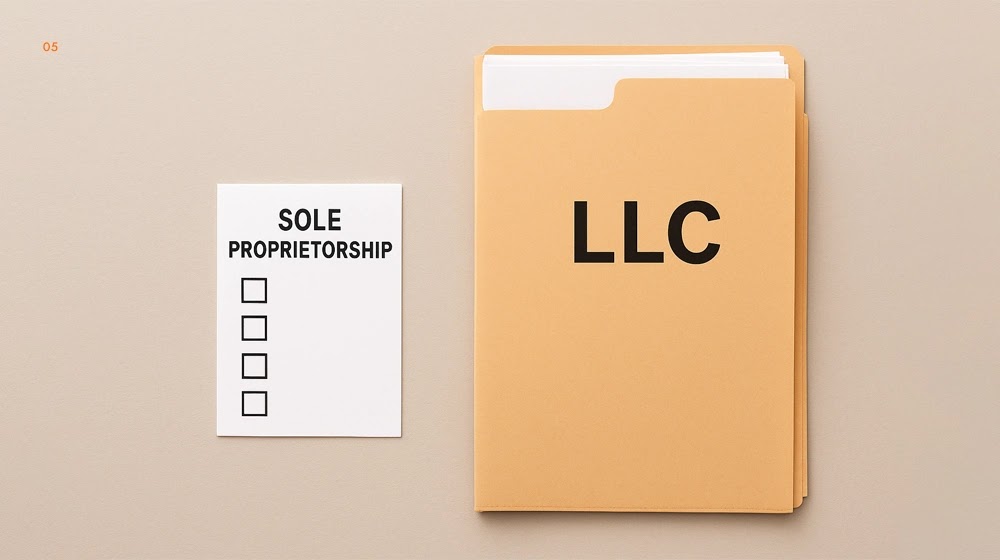
Compliance here is more than paperwork, it defines how simple or demanding your operations will be. Here’s how both structures compare:
Compliance for Sole Proprietorship
- Simpler reporting : A sole proprietorship has fewer corporate formalities. Since it is tied directly to the owner, the reporting obligations are lighter.
- Direct responsibility: The owner personally manages licensing, renewals, and keeping activities within the permitted scope.
- Restricted activities: In Dubai, a sole proprietorship is usually limited to professional services. Trading or commercial activities require special approvals, narrowing what the entity can legally do.
Compliance for LLC
- Stricter corporate governance : An LLC must follow structured rules, maintain proper accounting records, and in many cases, undergo annual audits.
- Regulatory transparency : These requirements increase trust from banks, investors, and regulators.
- Wider scope of activities : An LLC can cover more business activities but must ensure it has the correct trade license and meets Department of Economic Development (DED) rules.
Comparing the Two
- Sole Proprietorship: Less compliance hassle, but fewer opportunities due to limited activities.
- LLC: More demanding on compliance, but brings stronger credibility and wider flexibility.
For investors, the decision is about balance. Those who value simplicity may choose a sole proprietorship, while those focused on long-term credibility and growth usually lean toward an LLC.
Pros and Cons: LLC vs Sole Proprietorship
Sole Proprietorship
Pros
- Full control over decisions.
- Simple compliance with fewer reporting rules.
- Lower setup costs.
- Owner keeps all profits.
Cons
- Unlimited personal liability.
- Limited to professional services unless approvals are obtained.
- Lower credibility with banks and large clients.
- Difficult to scale beyond the owner’s capacity.
LLC
Pros
- Limited liability protects personal assets.
- Allows multiple owners and investors.
- Wide range of permitted activities.
- Stronger credibility with institutions and partners.
Cons
- Higher setup and ongoing costs.
- Stricter compliance and annual audits.
- Shared ownership means slower decisions.
Pros and cons are just the start. Here are 8 real challenges most business owners run into when setting up in the UAE, and this guide helps you stay ahead of them.
Setting the Right Foundation in Dubai
Deciding between an LLC and a sole proprietorship in Dubai comes down to choosing the structure that protects your interests and matches your ambitions. While a sole proprietorship offers simplicity and full control, an LLC provides stronger credibility, liability protection, and room for growth.
For foreign investors, the choice can feel more complicated. Rules around ownership, activity restrictions, and compliance can create hurdles if the wrong structure is picked. What looks simple on paper can lead to costly adjustments later.
At GCG Structuring, we guide investors through the decision-making process, highlight potential pitfalls, and set up businesses correctly from the start. With the right foundation, you can focus on growth knowing your structure is built to last.
FAQ
1. 0 Can I hire staff under a sole establishment?
Yes, but hiring is usually limited compared to an LLC. Larger teams often require special approvals.
2. 0 Do I need a local service agent as a foreign investor?
For certain licenses, yes. The agent doesn’t own any part of the business but helps with government-related processes.
3. 0 Can I change my business structure later?
You can, but converting to an LLC means going through new licensing and compliance steps. It’s easier to choose the right model from the start.
4. 0 Can I repatriate profits freely with an LLC?
Yes, LLCs allow full repatriation of both profits and capital without restrictions.
5. 0 Which setup is quicker to establish?
A sole establishment is faster and cheaper, while an LLC involves more paperwork and approvals.